
LVT vs Carpet: Which Is Better for Families and Living Rooms?
For a family home, the best answer is often both: LVT in the hall, kitchen and any room that takes spills and muddy feet, and carpet in bedrooms, on the stairs and in the main living room if comfort and quiet matter most. LVT wins on cleaning and accidents. Carpet wins on warmth, softness, noise and starting cost. Fitted, carpet runs roughly £27.50 to £55.50 per m² and LVT roughly £43 to £51 per m² before any subfloor work, on my current prices.
Most people ask "LVT or carpet?" as if one has to win. In practice it comes down to how the room is used. A hallway that gets wet shoes and school bags has very different needs from a sitting room where the family spends the evening on the floor in front of the TV. This guide compares the two on the things that actually decide it: comfort, noise, pets and children, cleaning, underfloor heating, lifespan, and the real fitted cost per m².
If you are still deciding between vinyl, laminate and wood as well, my LVT vs laminate vs real wood guide covers that side. This page is specifically LVT against carpet.
Key Takeaways
- LVT is easier to clean and better for spills, accidents and muddy paws. Carpet is warmer, softer and quieter.
- Carpet is cheaper to fit. LVT costs more per m² and often needs subfloor smoothing before it goes down.
- Both work over underfloor heating, but each has its own check: tog rating for carpet, maximum surface temperature for LVT.
- Flats and upstairs rooms are where carpet's sound absorption matters most, and where a lease can limit hard flooring.
- Mixing the two, with LVT in high-mess areas and carpet in soft-comfort rooms, is a sensible answer for most families.
LVT vs Carpet at a Glance
| LVT | Carpet | |
|---|---|---|
| Comfort underfoot | Hard and cooler. A rug helps in seating areas. | Soft and warm. The better choice for sitting and playing on the floor. |
| Noise | Harder, so rooms sound livelier and footsteps carry more. | Absorbs footsteps and echo. Quieter, especially upstairs and in flats. |
| Spills and accidents | Wipes clean. Liquid sits on the surface. | Can stain, and liquid can reach the underlay if not dealt with quickly. |
| Pets and muddy feet | Easy to mop. Scratches are possible on any hard surface. | Hides some mess, but holds dirt and hair until vacuumed or cleaned. |
| Underfloor heating | Works well. Check the manufacturer's maximum surface temperature. | Works if combined carpet and underlay tog is 2.5 or less (1.5 for heat pumps). |
| Subfloor demands | High. A thin hard surface shows every bump and crack in the base. | More forgiving. Underlay absorbs small imperfections. |
| Fitted cost | Higher per m². | Lower per m². |
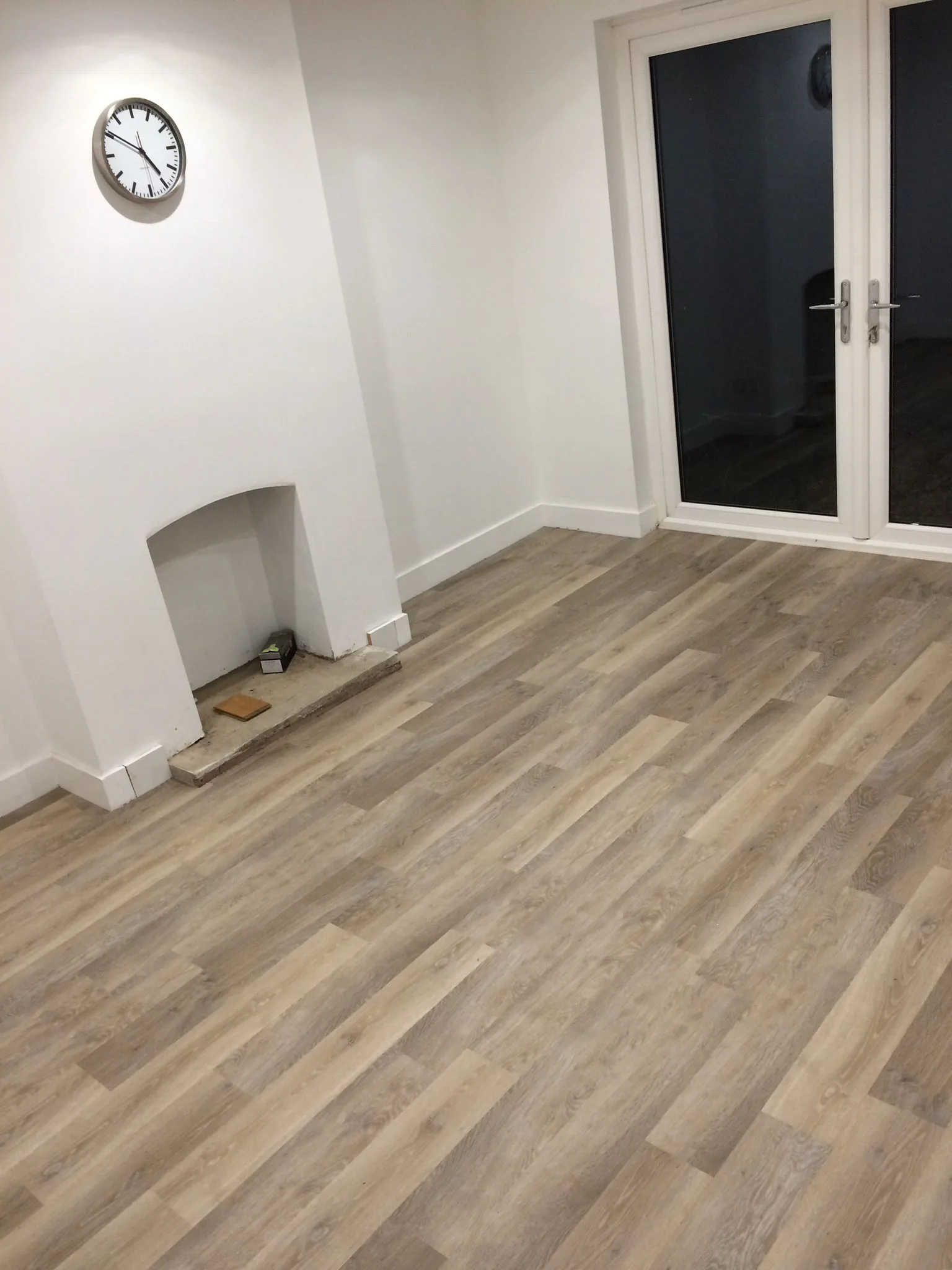
Comfort and Warmth in a Living Room
Carpet is the more comfortable floor. It is soft, it holds heat, and an underlay beneath it adds cushioning. If your household sits, plays and lounges on the floor, that matters more than any other point in this guide.
LVT is a thin, hard surface. It feels cooler underfoot, and it does not have the give that carpet and underlay provide. Over a concrete slab or a draughty suspended timber floor, that difference is noticeable on a winter morning. Two things soften it: underfloor heating, which makes LVT feel warm very quickly, or a good rug in the seating area. A large rug on LVT gives you most of the comfort of carpet where you actually sit, with the easy-clean floor around it.
Noise: Why Carpet Wins Upstairs and in Flats
Carpet and underlay soak up footsteps and reduce echo. LVT does not. A living room with hard flooring sounds livelier, and in a house with children running about, the difference is obvious. It matters most in two places: bedrooms above a living area, and flats.
If you rent a flat or own a leasehold one, check your lease before replacing carpet with any hard floor. Many leases require sound-absorbing flooring, and a noise complaint from the flat below is an expensive way to find out. I cover this properly in my guide to underlay for flats and soundproofing.
Children, Pets and Mess
This is where LVT earns its place. Spilled juice, a muddy dog, a child's accident: on LVT you wipe it up and it is gone. Liquid sits on the surface. On carpet, a fast response and a decent easy-clean carpet will deal with most spills, but anything that soaks through can reach the underlay and take far more work to remove.
That does not make carpet a poor family floor. A stain-resistant carpet in a bedroom, on the stairs or in a lounge that does not see muddy boots is a perfectly sensible choice. For the detail on which carpets cope best with pets, children and allergies, see my guide to the best carpet for pets, kids and asthma.
One honest caveat about LVT: it is hard-wearing, not scratch-proof. A dog with long nails will mark any hard surface over time, and heavy furniture dragged across it can leave scuffs. Felt pads under furniture legs are a cheap precaution.
Not sure which suits your rooms?
Tell me which rooms you're thinking about and who uses them, and I'll give you a straight recommendation and a fixed quote.
Underfloor Heating
Both floors work over underfloor heating, but each has its own rule and it is worth knowing both before you buy.
With carpet, the combined tog value of the carpet and the underlay should stay at or below 2.5, or 1.5 if you have a heat pump. Use a thin underlay made for underfloor heating instead of the thick foam you would choose for a normal bedroom. My guide on carpet on underfloor heating covers how to check the numbers.
With LVT, the thing to check is the manufacturer's maximum surface temperature, often around 27°C, and their instructions for bringing the heating up and down gradually. LVT is thin and conducts heat well, so it is one of the better coverings for underfloor heating. Always follow the specific product's guidance rather than assuming a general figure applies.
Subfloor: The Hidden Difference
Carpet is forgiving. Underlay absorbs small bumps and hairline cracks, so a reasonably sound floor is usually fine as it is. LVT is not forgiving. It is a thin surface laid on top of the base, and every bump, ridge and gap in the subfloor can eventually show through it, particularly with thin click-lock planks.
That is why LVT jobs often include subfloor preparation: latex smoothing on a concrete floor, or a plywood overlay on uneven floorboards. It adds to the cost, but skipping it is the most common reason an LVT floor fails early. I break down what is involved in my LVT subfloor preparation guide, and the moisture checks that apply to concrete and timber are in the LVT moisture limits guide.
What Each Actually Costs Fitted
These are my current starting prices per m² for a standard room with a sound subfloor, based on the same figures as the price estimator on the homepage. They are guide figures and I quote properly once I have seen the floor.
| Option | Material | Fitting | Underlay / adhesive | Fitted total |
|---|---|---|---|---|
| Basic easy-clean carpet | £15/m² | £6/m² | £6.50/m² (8mm PU, grippers included) | from £27.50/m² |
| Mid-range easy-clean carpet | £21/m² | £6/m² | £9.50/m² (11mm PU, grippers included) | from £36.50/m² |
| Wool loops and twists | £40/m² | £6/m² | £9.50/m² (11mm PU, grippers included) | from £55.50/m² |
| Glue-down LVT plank | £26/m² | £17/m² | £5/m² adhesive allowance | from £48/m² |
| Click-lock LVT | £34/m² | £17/m² | None needed by default | from £51/m² |
Subfloor smoothing for LVT is extra, at roughly £10 to £18 per m² depending on the method, and only where the floor needs it. Carpet rarely needs that. Add a waste allowance of around 10 per cent on materials, which is how the estimator works the quote out. If you have already bought the flooring yourself, I also fit labour-only: see the fitting-only guide. For a wider look at carpet pricing across South London, see the carpet fitting cost guide.
If you are weighing up a pattern floor, my herringbone LVT guide covers that grade and its cost. Over a typical 18 m² living room, that puts carpet roughly £200 to £400 below LVT on the figures above. The gap narrows if the carpet is premium wool, and widens if the LVT floor needs smoothing first.
Lifespan and Wear
LVT generally holds up better in busy areas. The wear layer resists scuffing, and if a plank is damaged it can often be replaced on its own without redoing the whole floor. Carpet lasts well in lower-traffic rooms, but a hallway or the stairs will show wear sooner than a bedroom, whatever you buy.
Neither floor is maintenance-free. Carpet needs regular vacuuming and an occasional deep clean. LVT needs sweeping or vacuuming and a damp mop, plus attention to the edges and seams so standing water does not sit there. The quality of the fitting counts as much as the product: a well-fitted mid-range floor outlasts a badly fitted premium one.
Which Should You Choose?
Main living room, family sits on the floor. Carpet, or LVT with a large rug. Pick carpet if warmth and quiet matter more than easy cleaning.
Hallway, kitchen, utility, kids' play area. LVT. These are the rooms where mess lands, and wipe-clean flooring pays off every week.
Bedrooms and the landing. Carpet. It is warmer on bare feet, quieter overhead, and the lowest-cost option.
Stairs. Carpet is the usual choice for grip, comfort and noise. See my stairs and landing carpet guide.
Flat with a sound-insulation clause. Carpet, unless your lease and building management confirm a hard floor is acceptable.
Open-plan living and kitchen. LVT throughout is the simple option, with rugs where you want softness. Mixing the two across an open-plan space works too, but plan the join so it sits at a natural point such as a doorway or a change in room use.
Frequently Asked Questions
Is LVT or carpet better for a family with young children?
Is LVT or carpet better for pets?
Is LVT colder than carpet?
Which is quieter, LVT or carpet?
Can you put LVT or carpet over underfloor heating?
Is LVT more expensive than carpet to fit?
Which lasts longer, LVT or carpet?
Can I have LVT downstairs and carpet upstairs?
Is LVT good for allergies compared with carpet?
Areas I Cover
Based in South London, covering Surrey, Kent and Sussex with the mobile showroom:
The Bottom Line
- LVT is the practical choice for mess-prone rooms and busy households. Carpet is the comfortable choice for rooms where you sit, sleep and want quiet.
- Carpet costs less to fit and is more forgiving of an imperfect subfloor. LVT costs more and needs a properly prepared base.
- Both can go over underfloor heating if you check the right figure: tog for carpet, maximum surface temperature for LVT.
- Many families do best with both: LVT where it is wet and busy, carpet where it is soft and calm.
If you are deciding for a home in South London, Surrey, Kent or Sussex, I fit both: carpet fitting and LVT installation, as supply-and-fit or fitting-only, with no subcontractors and a mobile showroom that comes to you (more about Paul here). Get in touch or call 07903 320 414 for an honest quote.
Get Your Exact Price
Three fields. Paul replies personally — usually within the hour, always the same day.
Prefer WhatsApp? Send a photo of your room to 07903 320 414 for a faster estimate.